The Multifaceted Albion Moonlight: A Study in Identity, Proxies, and Synchronicities
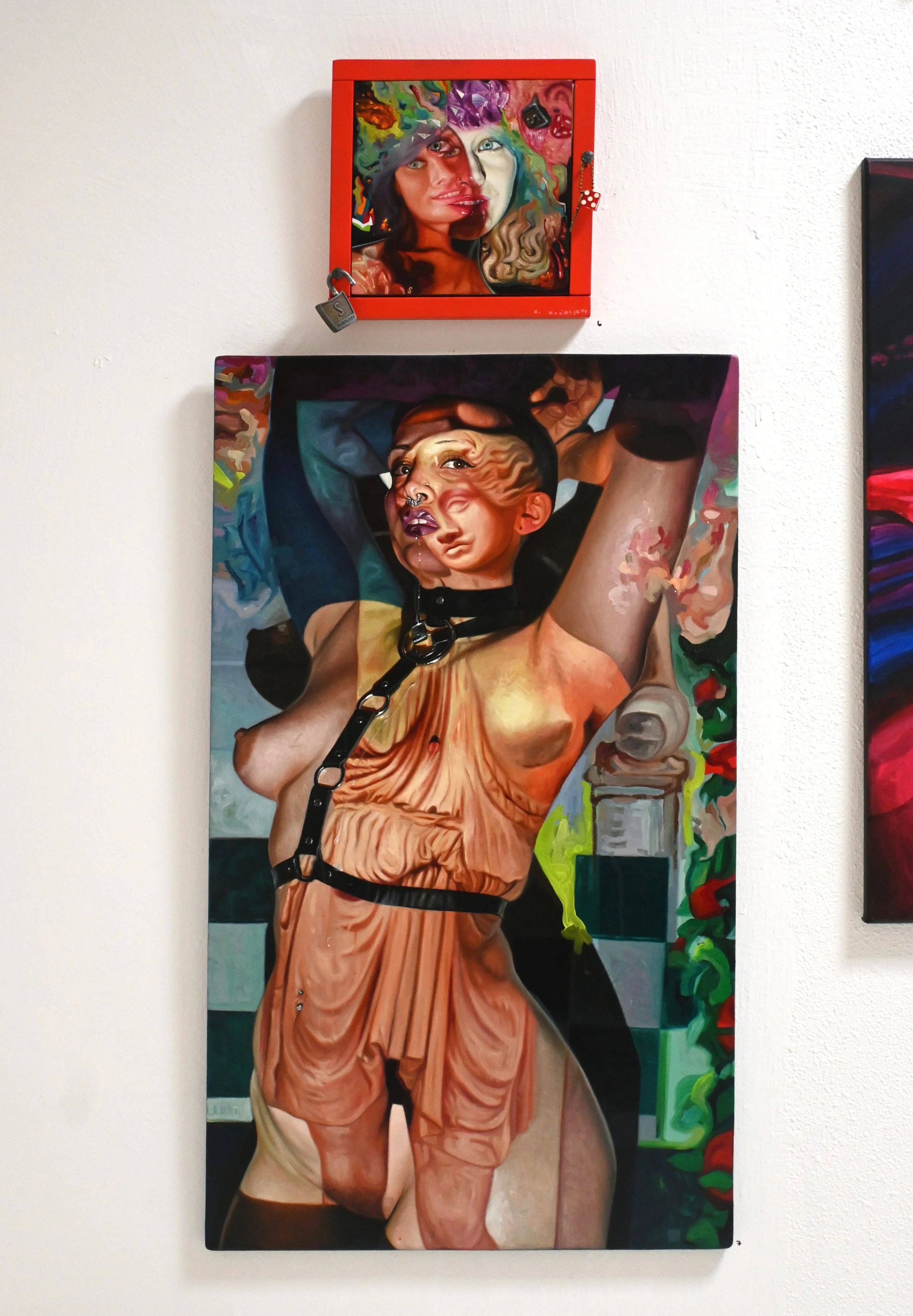
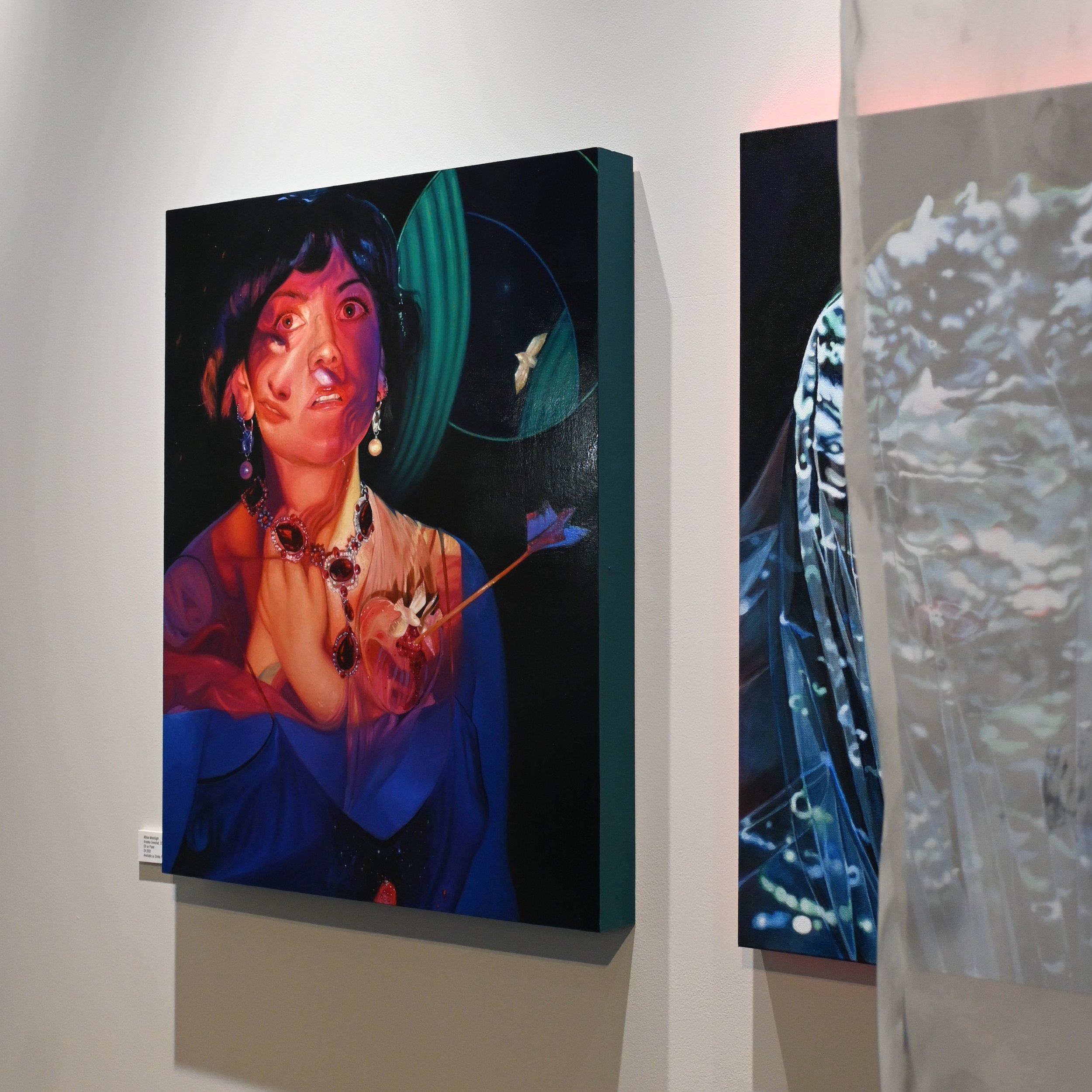
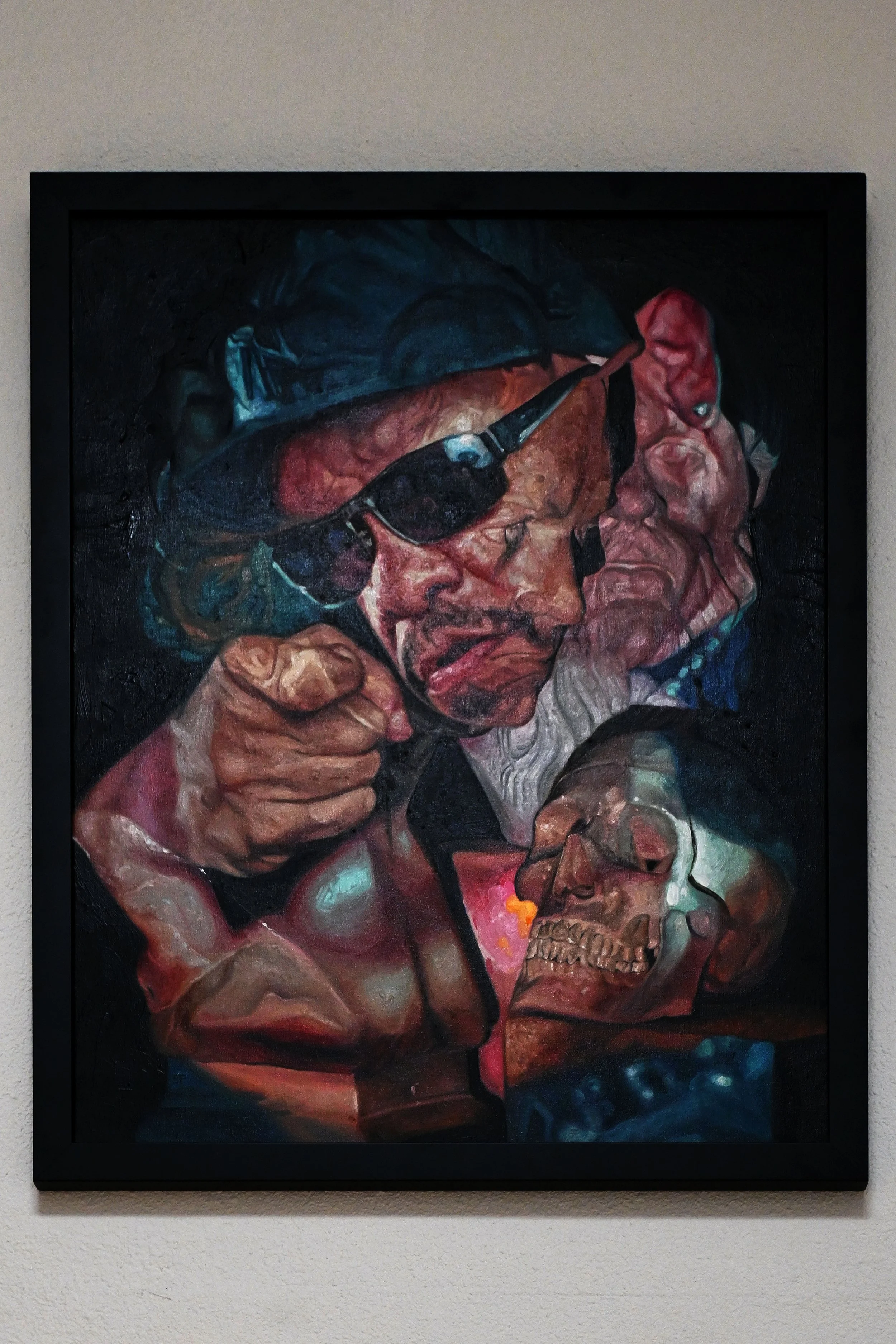
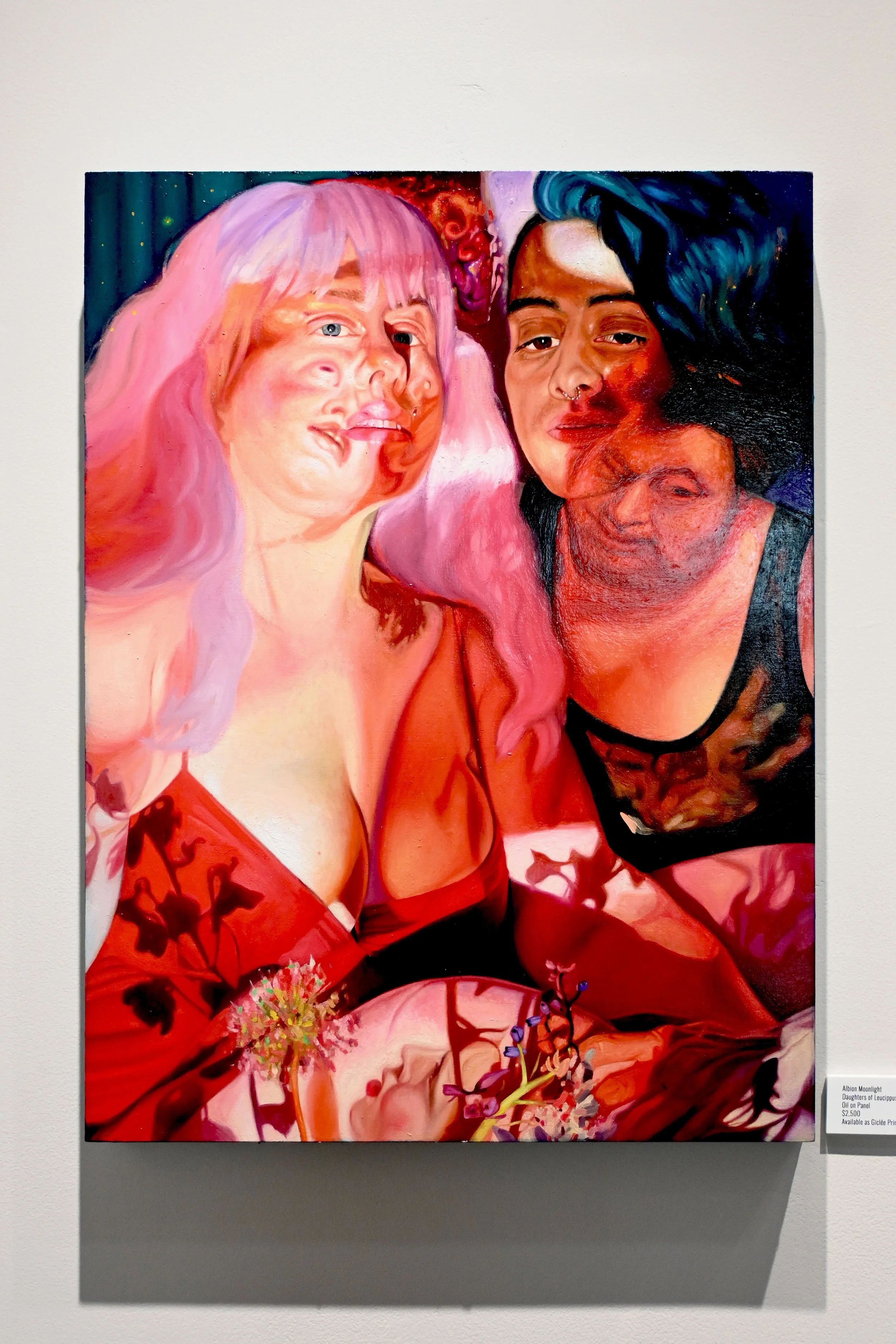
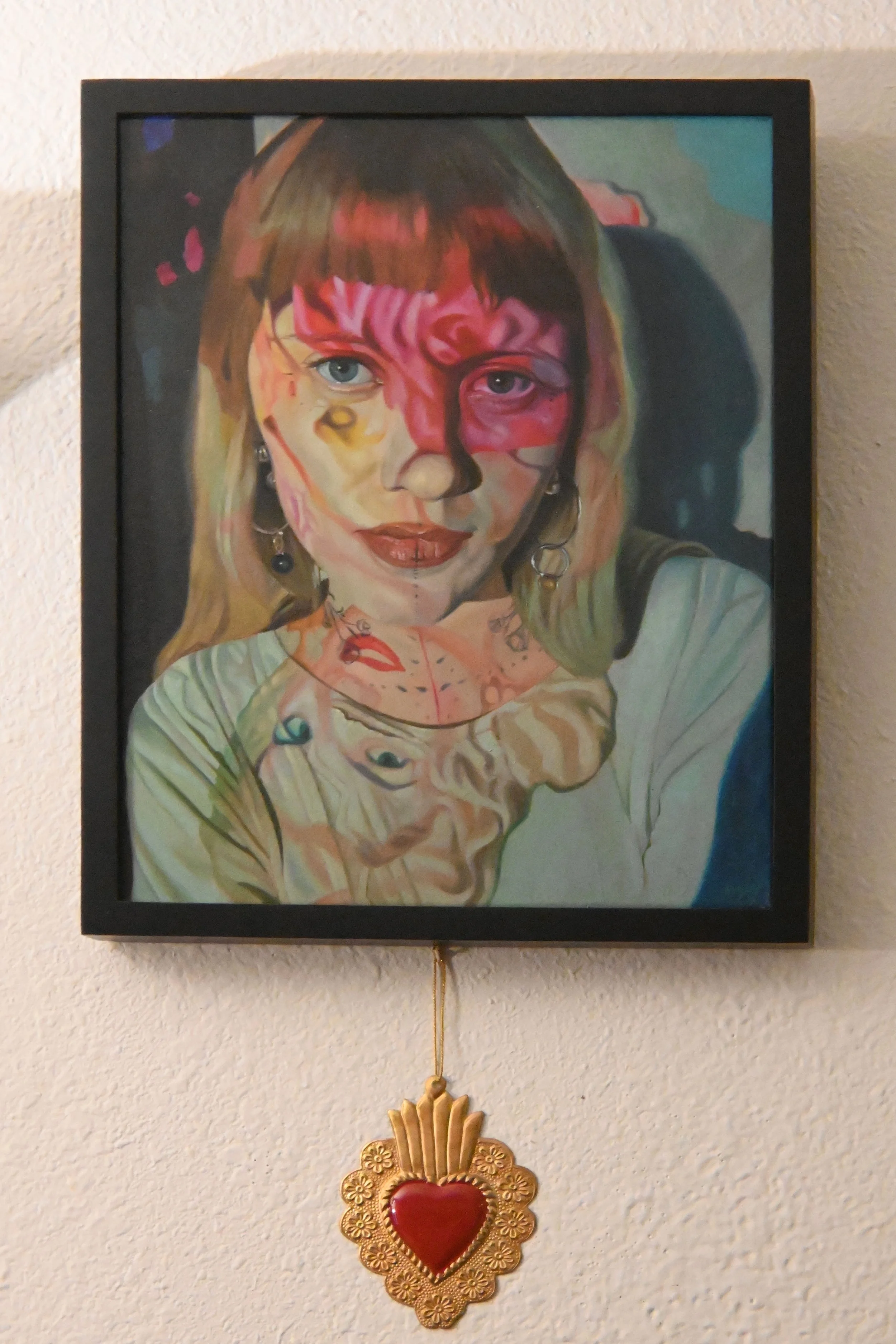
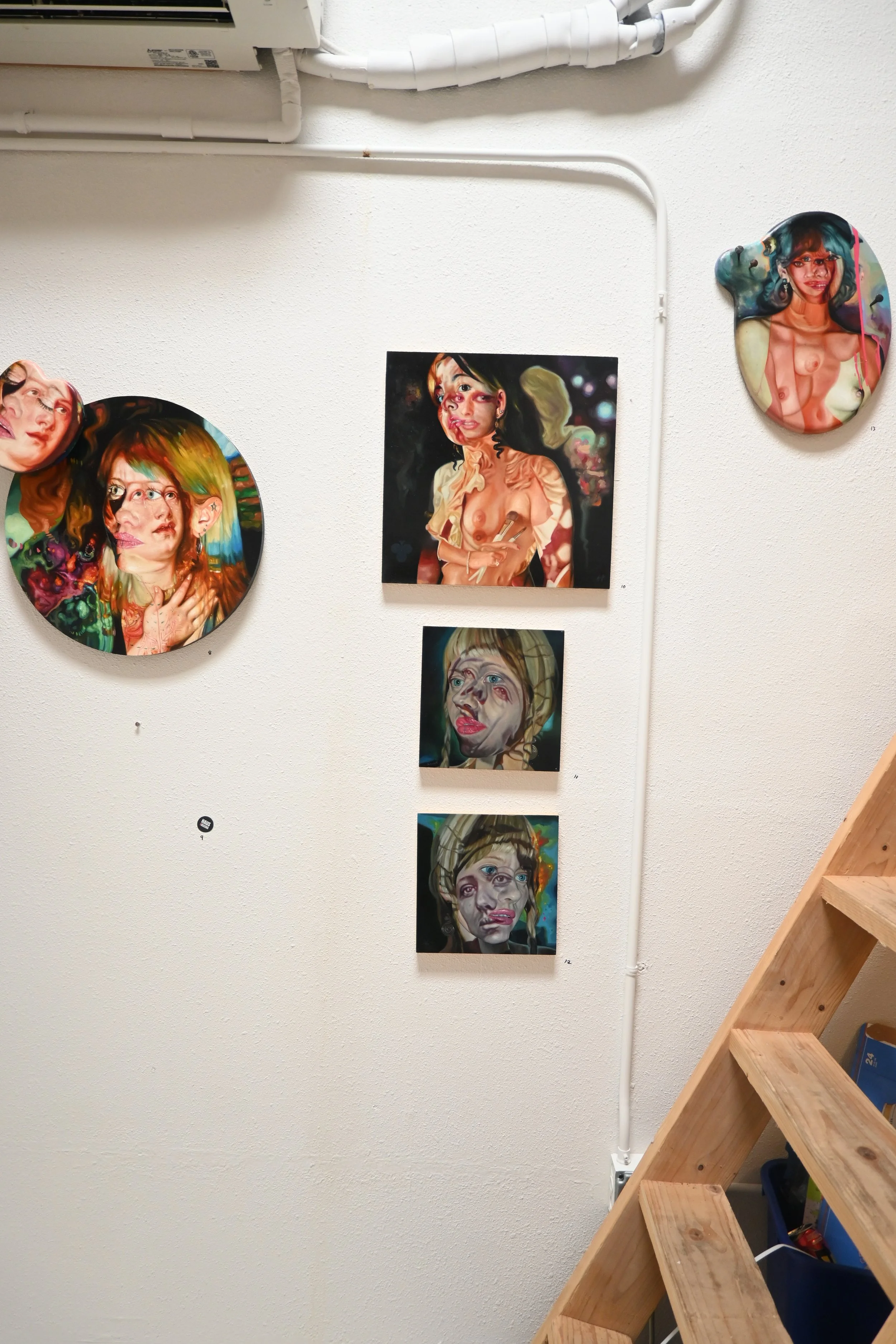
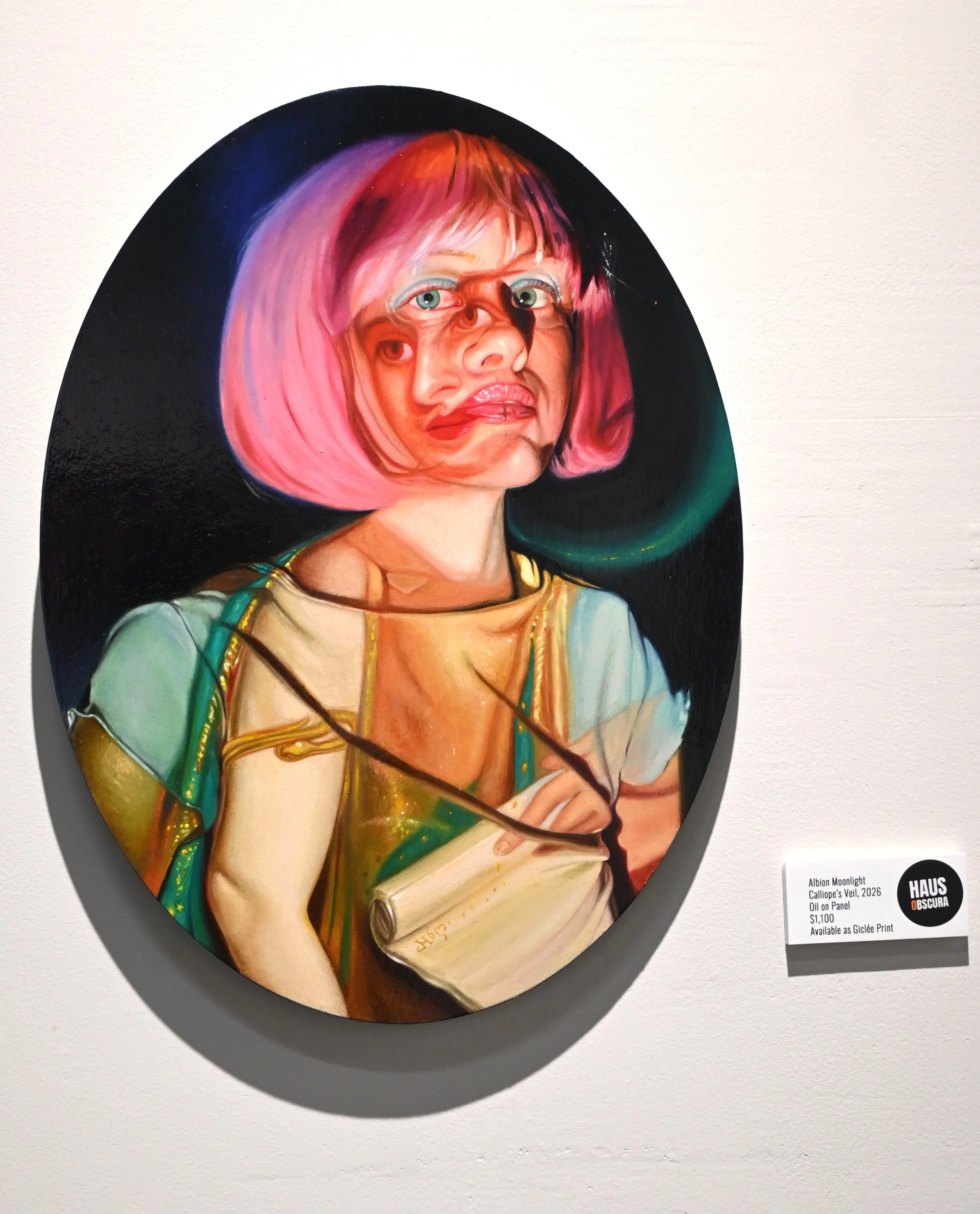
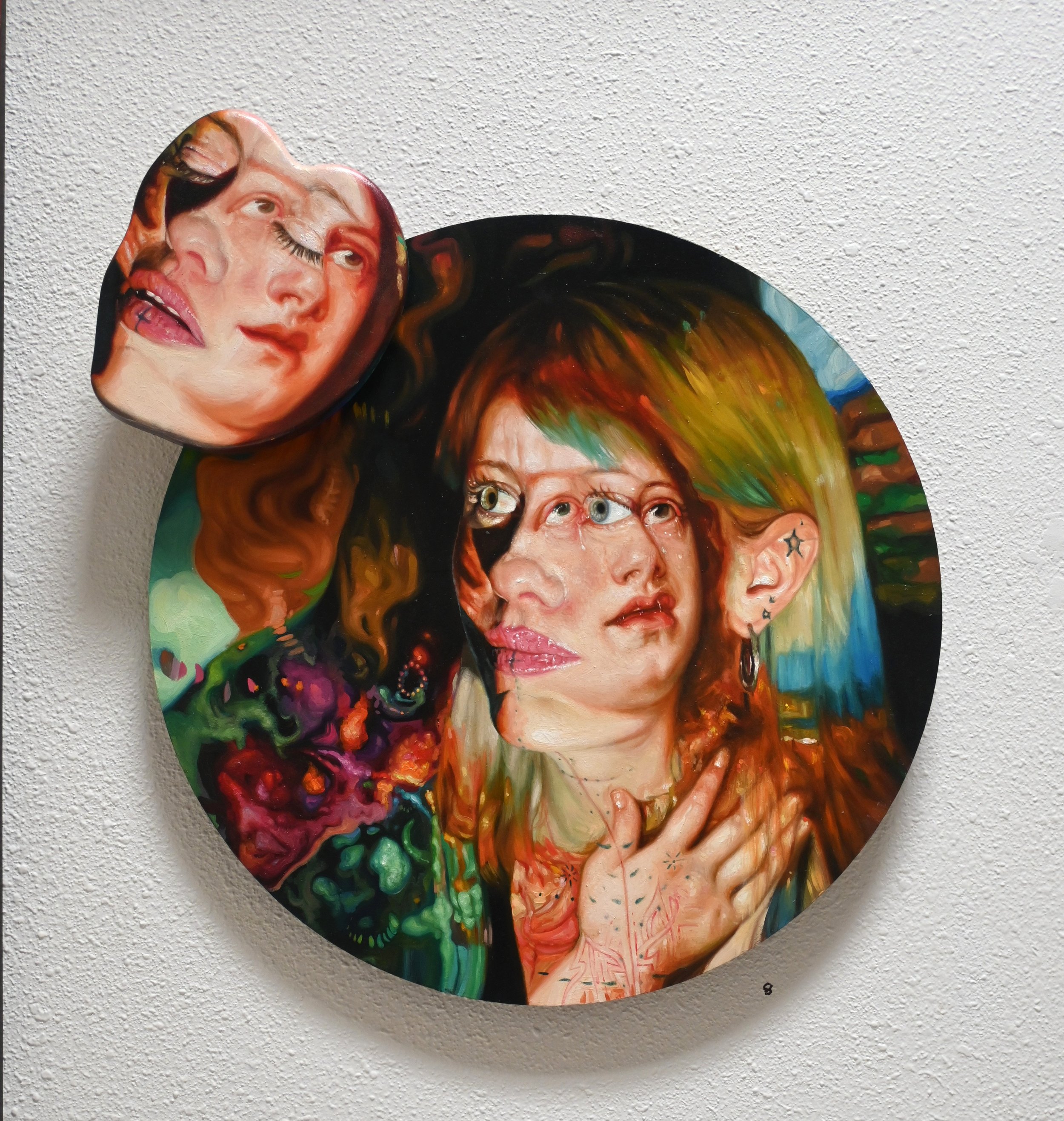
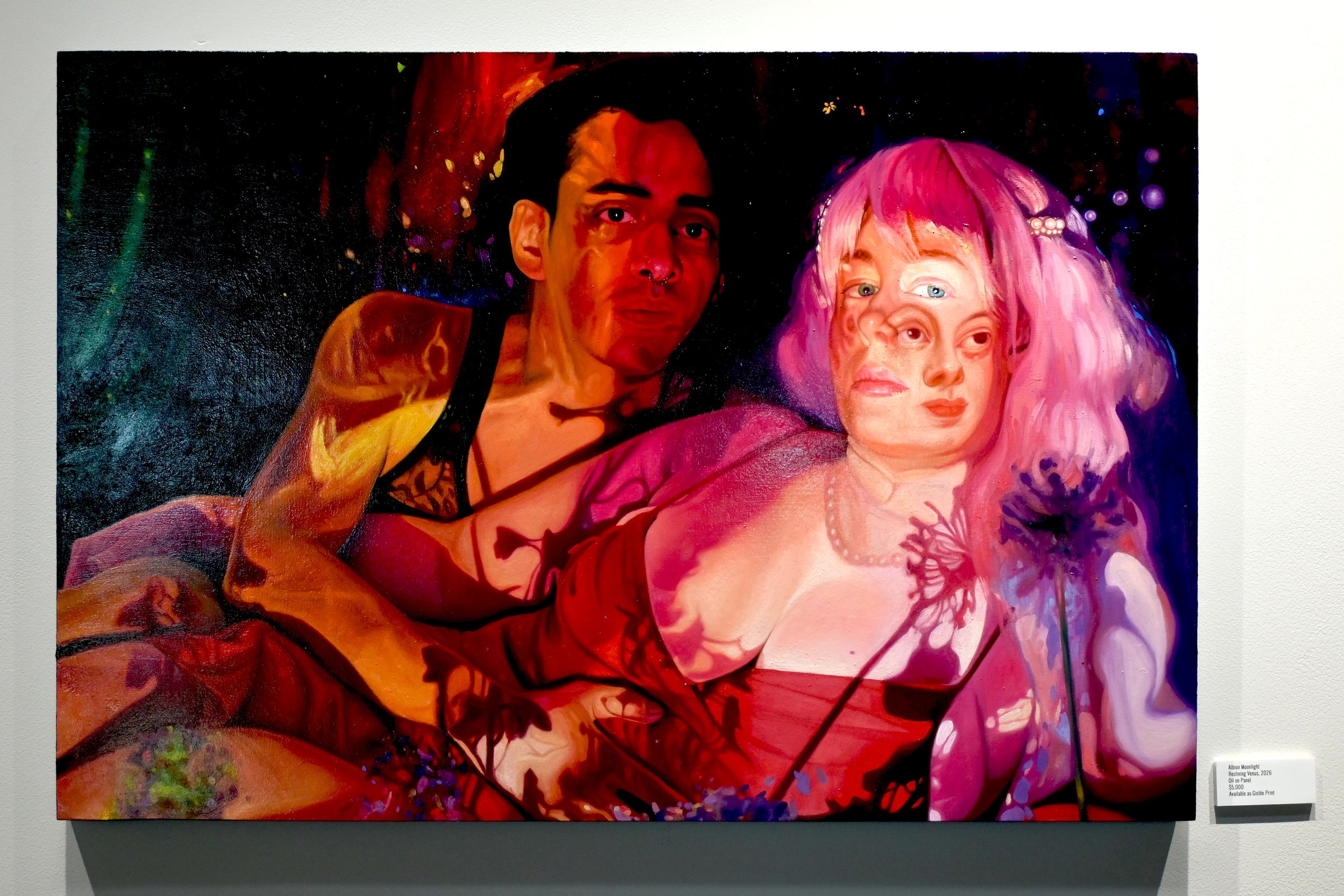
Installation view of Albion Moonlight’s work at Veil/Unveil, May 22, 2026–July 26, 2026 at Haus Obscura, Austin, TX, photos by Jenny Botello
Albion Moonlight doesn’t really like their father; in fact, they think that he was a square. And perhaps he was. Frankly, the laser engineer who happened to pass part of his genes onto the trans non-binary artist—along with some old-school, boat-sealing turpentine and just-generally-old oils when said artist was eight years old—didn’t seem like the best hang.
“I’ve always hated my [birth] name.” Albion confided. “I was named after a boy that my father had rescued from drowning… and he had a plaque of [the whole event]. It’s so indicative of his worldview. Like, anytime he would say the name, he would have to talk about that story. And everyone thought that I was Irish.”
That last part is pretty far from the truth. Albion is part Cherokee on their dad’s side and Blackfoot and Cree on their mother’s side. But they were mostly raised as Italian. They’re not actually Italian, though. More on that later.
Apparently, their father failed to provide an iota of art or safety instruction. He didn’t advise little Albion to work in a ventilated area lest they inhale noxious fumes nor caution them against getting turpentine on their skin and, therefore, directly into their bloodstream. He simply had some old solvents and paint he wanted to get rid of. And although cancer research and common sense would categorize this as child endangerment, it fortuitously altered the course of Albion’s life.
“He wasn’t a good father…We didn’t get along very well. But…I fell in love with [oils]. It was so cool…I never looked back. It was my only medium.”
And they have diligently pursued painting (sans turpentine) since then. They attempted to refine their craft at MassArt but dropped out after a year due to boredom and frustration. They wanted to learn more about technique, about the application and the mixing.
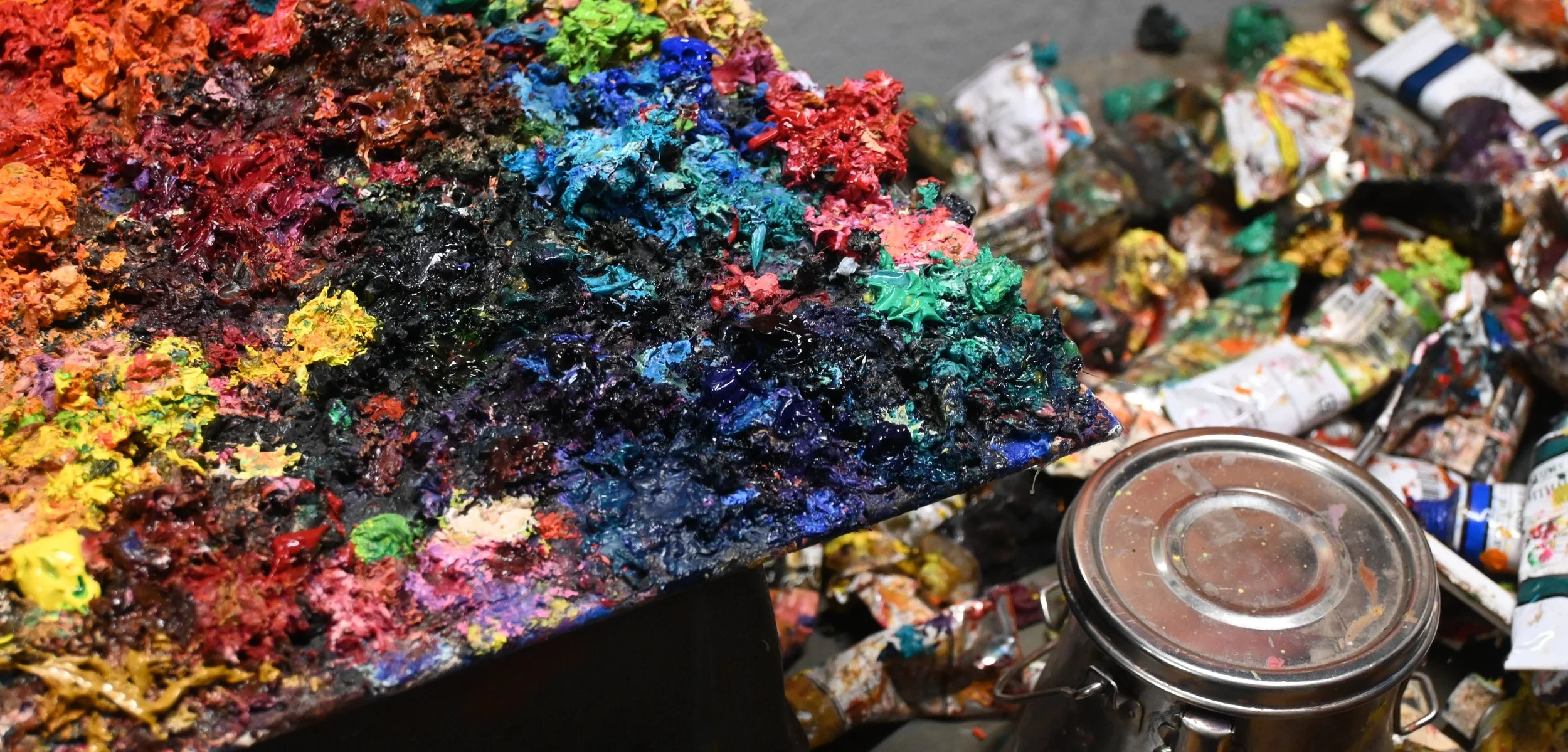
Oils and palette from Albion’s current studio
“Now, I understand more about how that world works. But at the time… I thought that they would provide some sort of formula. They don’t do any of that. It was more conceptual; about ideas and developing them. That was not the kind of education I wanted… I didn’t like it. So, I took off to Oklahoma to spend some time with my grandfather and my family there and to be able to spend some time on the reservation before he passed.”
Albion was on the reservation for about a year before they returned to Boston and sought out David Small at MassArt who practiced the classical Flemish technique, Mischtechnik.
“He taught me that technique over the course of a year. That was the only painting class that I ever did. And that was great because we mixed our own paints; there was a formula to it…
With that technique, you cannot mess with the chemistry of it. It will fall apart quickly because the structure of the albumen in the egg tempera is really, really brittle. So, it will flake right off. It’s a weird technique, but it forces you to be very precise. That’s [something] that I have been fighting ever since: the precision. When you do egg tempera, you can’t do big swaths of color with a big brush because it will just flake off. So you have to work in a series of crosshatches. So when you see an Andrew Wyeth egg tempera [painting]... If you see a white wall [in one of his pieces] and you look up close, it’s just billions [of crosshatches]. It [would take] him like six years to paint one of those.
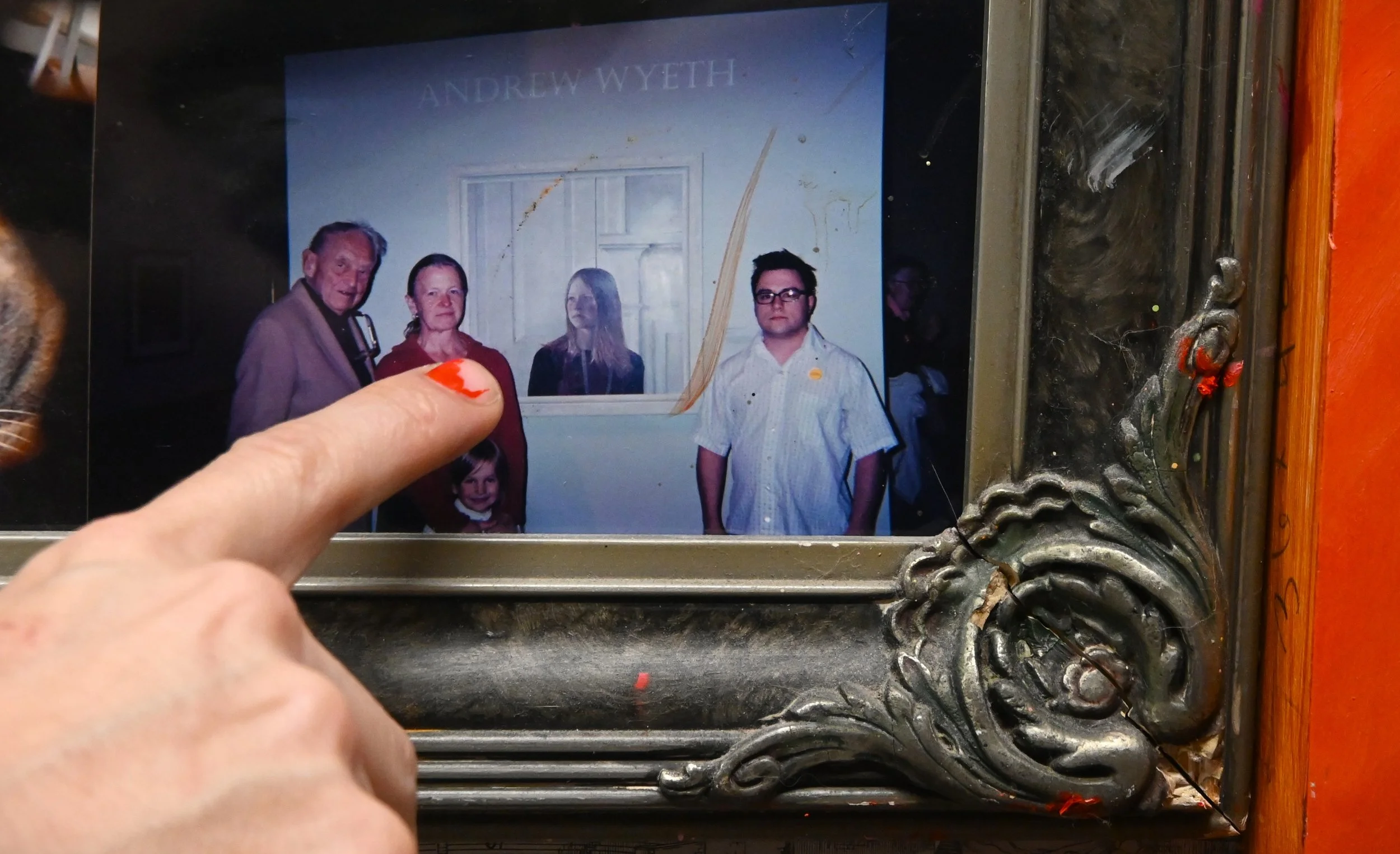
Young Albion standing nervously next to Andrew Wyeth, his portrait Siri, the portrait’s eponymous model, and her grandchild
“And that was my technique for years … Now my technique is so loose. It’s taken me so much time just to unlearn that even though it taught me so much. Even though I wouldn’t be who I am without it. It’s been this push and pull of getting away from that and getting back to how I felt when I was younger… When I was more direct and didn’t know how to paint.”
Albion was originally drawn to the technique when they came across the work of Austrian surrealist painter and sculptor, Ernst Fuchs. They were honed into his pieces; how they looked “jeweled.” Although they no longer work in that specific way, they’re still seeking that kind of surface. And the influence is palpable, especially with Fuchs’ later works. Both artists evoke a tactile experience; one can almost feel the flesh of the subjects. Both pay special attention to a certain feature, such as the nose, eyes, or lips. Both of their compositions’ surrounding adornments are sedulously detailed and surreal. Both are deeply psychedelic yet classical in nature.
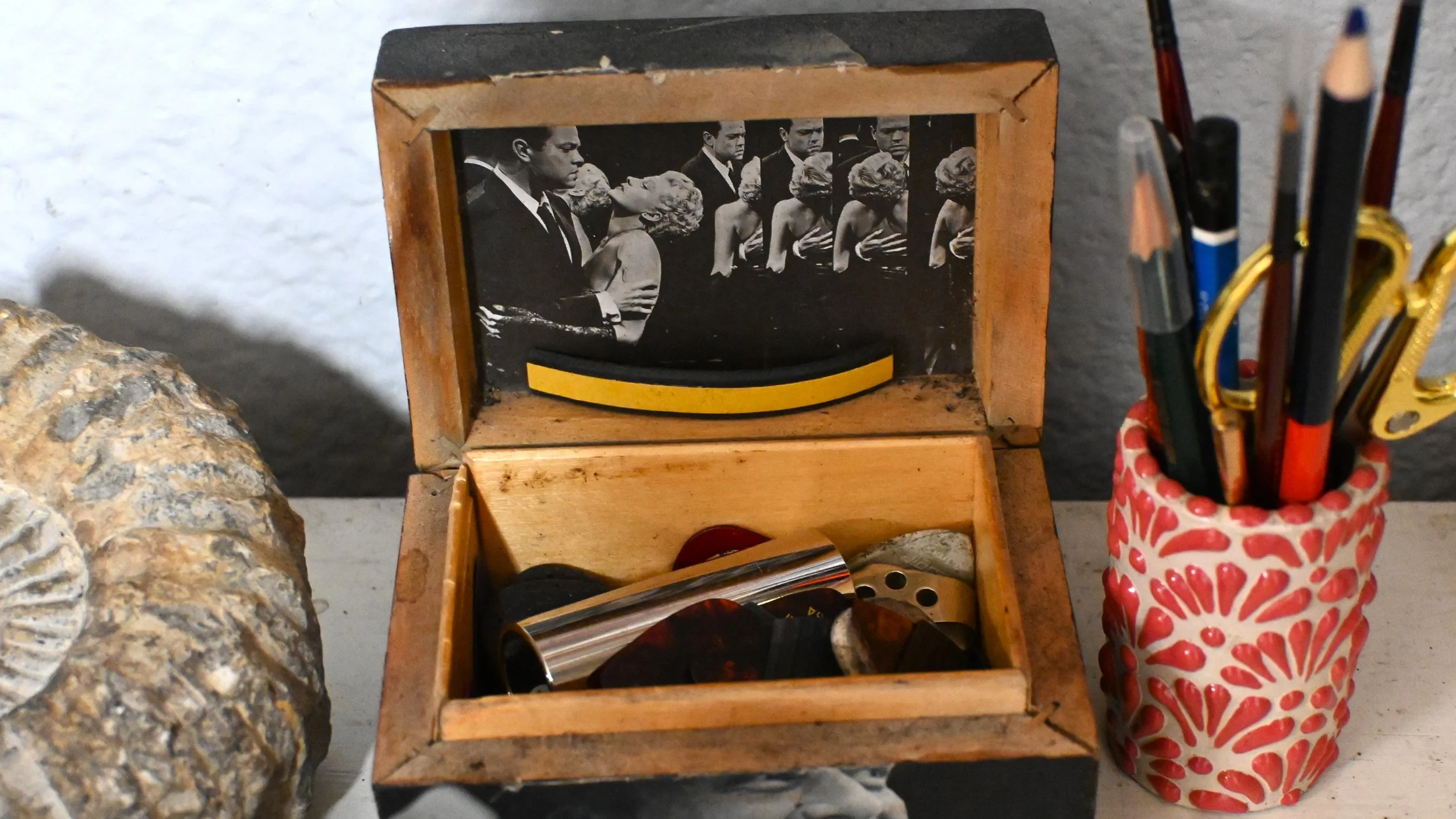
Individually, however, Albion’s work is hyperfocused on image, identity, context and the deconstruction and reconstruction thereof. From a distance, their paintings look like a collage made out of scraps of their soul, their inspirations, their day-to-day experiences. Their subject matter is also intensely intimate and—on multiple levels—revealing, yet difficult to decipher right away. For example, some models are literally depicted in the nude but it can take the viewer a moment to register this due to the superimposed images. And even then the eye can’t help but grapple with the images that confused its perspective in the first place: to uncover layer after layer of film stills atop sensuous (and more recently, subtly glittering) flesh, and to engage with the reflections, refractions, and shadows.
I tried to find out what had inspired Albion to consistently reference films from the last century when I initially stumbled upon their work a few years ago. I was genuinely confused as to why they were never asked during interviews. However, the surface-level answer was so self-evident that I was offended that it hadn’t occurred to me before.
“I love old films. I ran a video store for a really long time back home [in Amherst, MA]… And that’s when the whole projection thing started.
They started by drawing one of their favorite actors, Carole Lombard, onto a model, but they weren’t satisfied with the results.
“It didn't work. I didn't like it. But for the next one, I wanted to do a painting of Jean Harlow and I projected it on my model, and that's the first one that was actually successful. So, the whole thing was just to incorporate my love of movies into my visual art. And then I realized the poetic capability of it.”
And it’s these (previously) unspoken, yet clearly written details that add richness to their work. Although Albion rarely publicly depicts themself in the physical form, it’s quietly evident that every painting is a self-portrait. Lana Turner, Carole Lombard, Barbra Stanwyck—all these actors were either finding success in the Pre-Code era of Hollywood or defying convention after the fact. And they weren’t breaking social norms exclusively set upon women, either. Many of the actors Albion depicts in their paintings were screwball starlets, meaning they embodied jovial personas that were larger than life during particularly somber moments in history. Think Jim Carrey, but in black and white and during the Great Depression. They fostered a bit of laughter in spite of the surrounding bleakness which is rather ironic given that Albion consistently appears solemn in the few traditional self-portraits they have available online. This is something of specific interest to me: Albion doesn’t strike me as a grim individual. Serious, intellectual, partial to a spoonful of negativity—for sure. But the models and the overlaid images depicted in their pieces seem to reflect something more piercingly Albion, more do-I-contradict-myselfness, than the artist’s earlier self-depictions. They capture or evoke something within the artist that may not be immediately evident upon first glance; a soft dynamic force; a fluid determination and intensity that builds over time. Perhaps this is why they are so specific about who they paint.
“I almost think of it as a movie casting … I come up with the idea and then I go, who's right for this? Now that I have more models, it's becoming so much more fun because they're all artists and everyone's up for it. It’s kind of like how Ingmar Bergman would use his cast of actors. I’ve always liked that idea, of a repertory of players. Because you work with them, and you work well with them. I've had some bad experiences with models in the past and now I have this great community. It's so different; wonderful…”
According to Albion, they often begin a piece with a vague idea—something more akin to instinct rather than a fully realized plan. They don’t stop to ponder its significance until much later on in the process. Eventually, however, they realized that they were (ironically) projecting themselves onto the models; that some of them represented dual parts of Albion themself.
“The models are mostly non-binary and female … They’re all friends now … and they’re all artists—that’s really important to me. Like, Lili, who I paint, is in a band called Next of Kin (and who just blew the roof off of ACL). Another one of my models is a poet who I read with sometimes and we’re actually going to do a poetry project together.
That’s another thing. After Albion realized why they were projecting specific, more deeply personal stills onto the aforementioned models that they also related to in certain aspects, they felt ready to move on from discovering their identity to expanding and exploring it. This included having a little more fun with collaborations, which further sharpened the intuition they rely on.
And it’s fucking sharp. Albion was able to consistently and almost consecutively answer most of the questions I had prepped without me having to ask them directly, which was slightly frustrating for my ego but fascinating for my soul to see play out in real time. This instinct of theirs has also allowed for synchronicities. For example, they did a whole series on anxiety with vampiric images and upon seeing the stills, the model (who is a tattoo artist that also creates her own stunning jewelry pieces) admitted that she would pretend to be a vampire as a child. In fact, she bit her teacher one time and got into deep trouble.
Albion loves those moments of chance alignments. It really pushes their underlying artistic narrative that everything is connected. And, again, it doesn’t necessarily have to make sense or become relevant the moment it’s created.
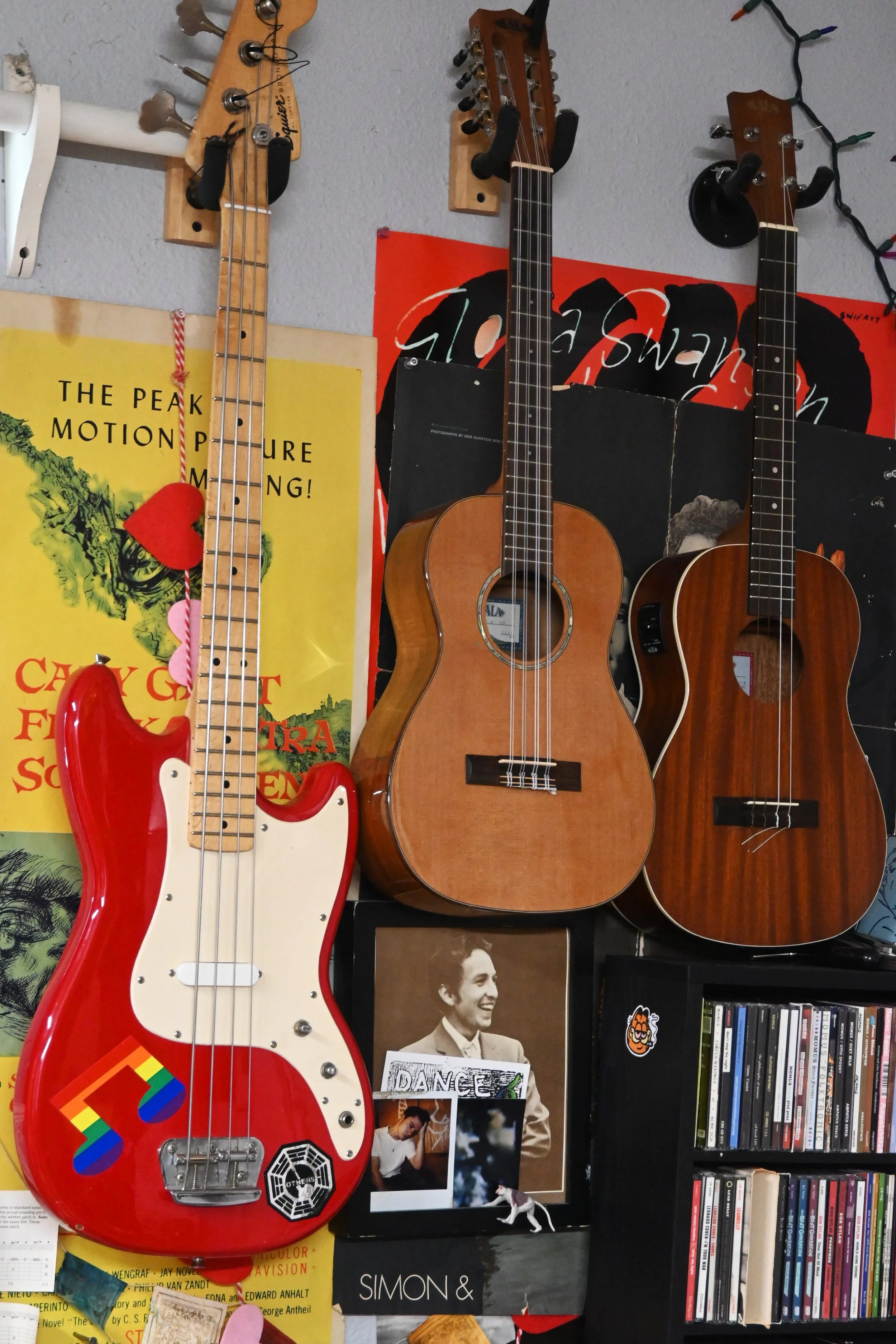
“I wrote a song for every episode of the show Lost. I was unemployed and had a lot of time on my hands… I would kind of recap the episode and then post them every week, and people would subscribe to it [on Youtube]. And it became this whole, huge project because the show’s producers found out about it, and then the actors on the show did, too. So, it became, like, a thing. We [the aptly named The Others band] were getting all this recognition and playing at conventions and stuff.”
Every once in a while, Albion would chuckle as if at the incredulity of it all. But it is incredulous. In fact, the main reason why this era of Albion’s life was fresh on their mind is probably because the documentary Getting Lost reached out to the artist last year requesting to use some of those very songs. The whole thing is almost as unbelievable and surreal as the show itself.
“And it was nice to have a structure [like that]. It was such reportage, really. But they were some of the most emotional songs I ever wrote. When I look back at them now, they're about me, but you wouldn't know it from the song itself. The emotionality of those songs brings me back to where I was, even though all the lyrics were ridiculously stupid; especially if you didn't know the TV show and you tried to listen to these lyrics…
“We had a full band and a recording studio. Like, we had a violin player! They were fully formed songs. It just kind of sounds like such a ridiculous project and I kind of love that I did that, but it is a weird thing. Some of the songs make me cry, and it's so stupid, because I was singing from my feelings, but using these other people as proxies, kind of.”
This is why they practice their music, painting, and writing together; to illustrate how everything is already or will eventually become interlaced. It’s also a driving factor behind Kenneth Patchen’s influence on the artist. Beyond his picture poems, Patchen had a literary practice that emphasized simultaneity and a moral philosophy that echoed that.
It’s also worth mentioning that (the literate probably connected the dots already but I’ll spell it out right now for the fellow philistines out there) Patchen has seeped deeply into Albion’s more personal life. When the artist initially began to transition, they realized that this was the perfect opportunity to change the name that they had disliked for so long. Not only that, since changing one’s first name is already a pain in the ass (legally, or otherwise), they could also get rid of their father’s last name and feed two birds with one scone.
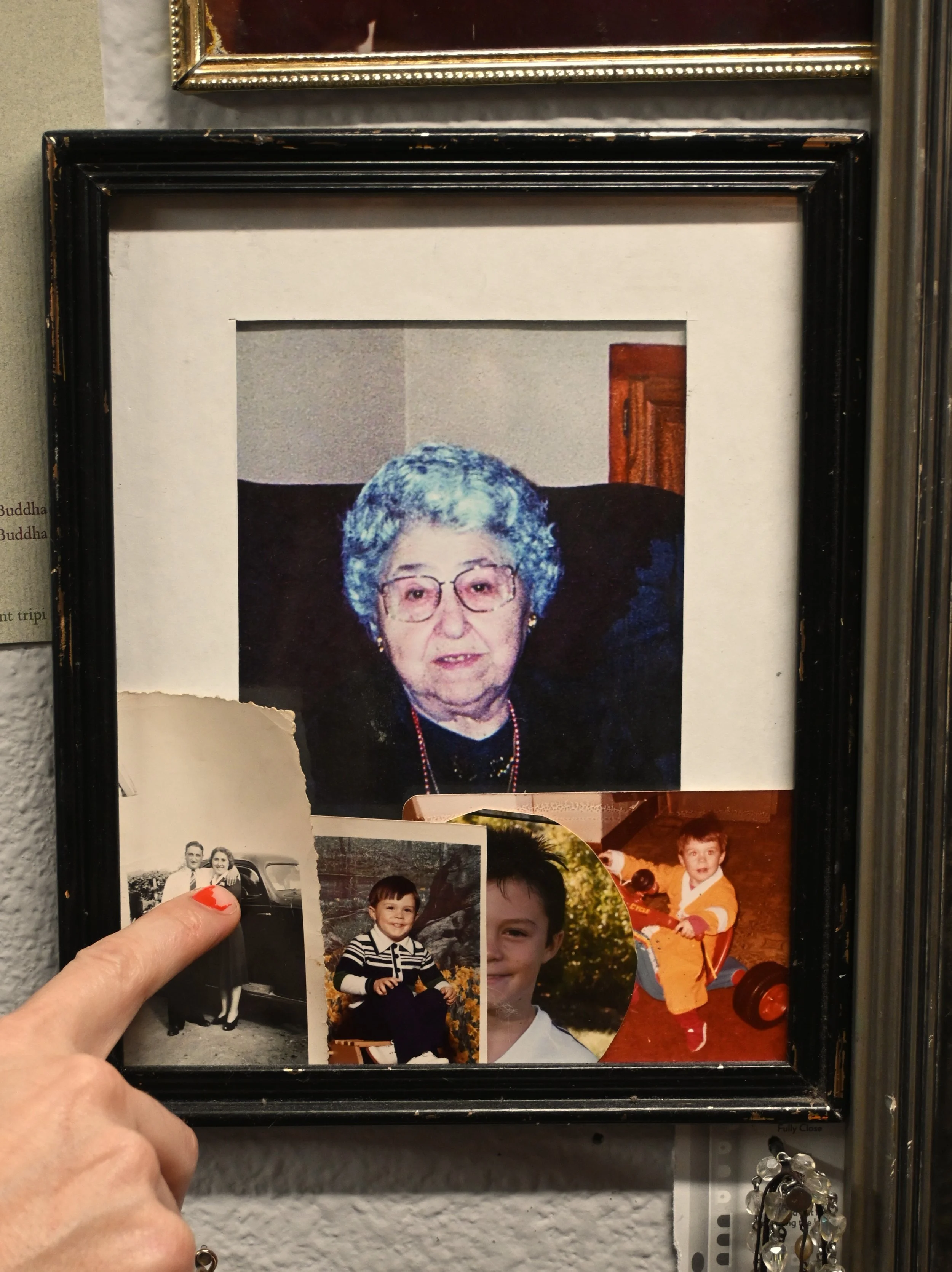
“And then I thought about taking my grandmother’s name, Grimaldi, but that’s complicated, too, because she adopted my mother. So, that’s why I say that I’m not Italian but I was raised Italian. And the adoption ruined my mom’s life. It obsessed her. She was a casualty to this. So… I was just, like, what am I holding on to? I just want to get rid of this whole fucking thing. I was on a lot of mushrooms.”
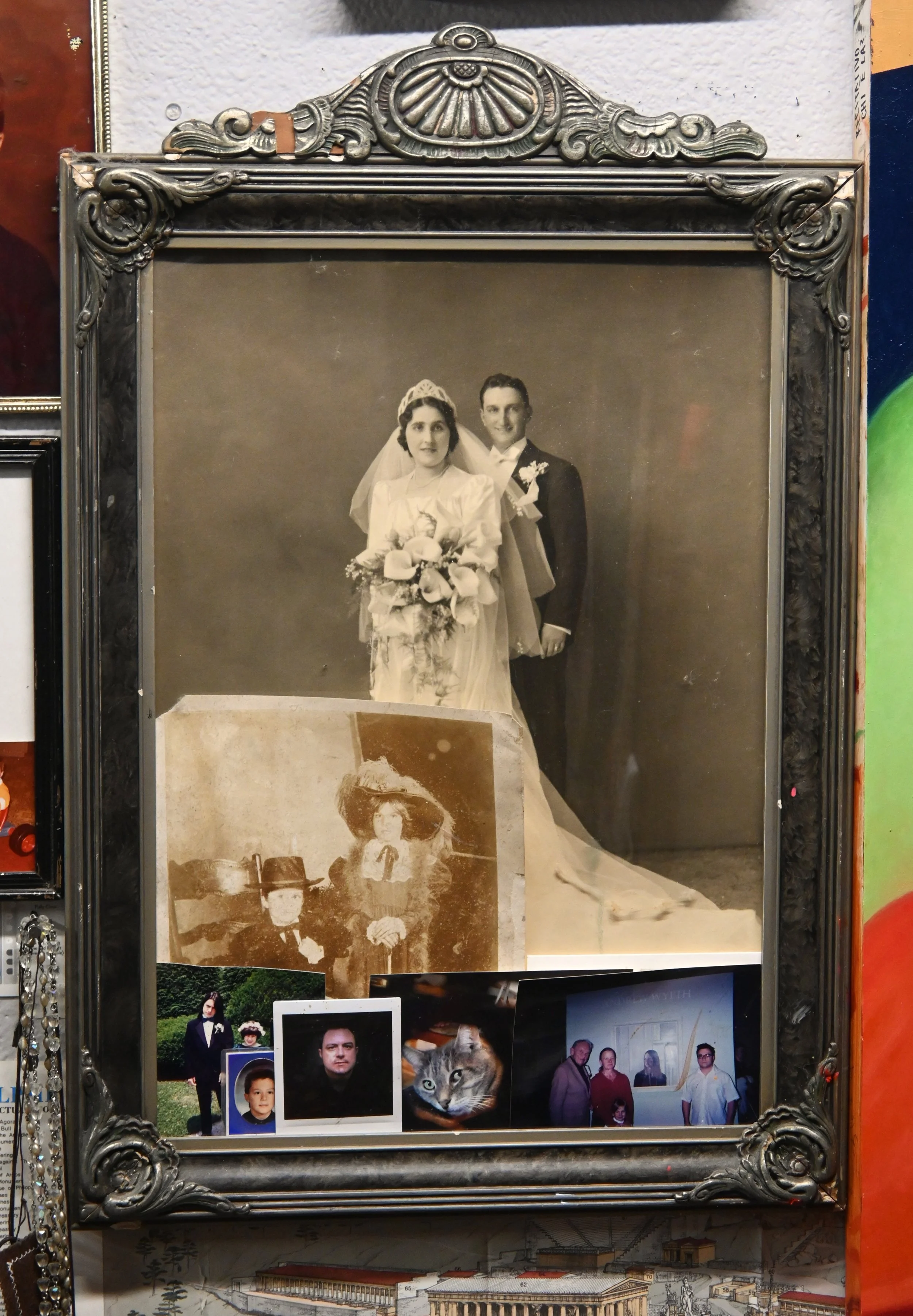
During this heroic dose of shrooms induced breakdown, they peeped into the depths of their daddy issues.
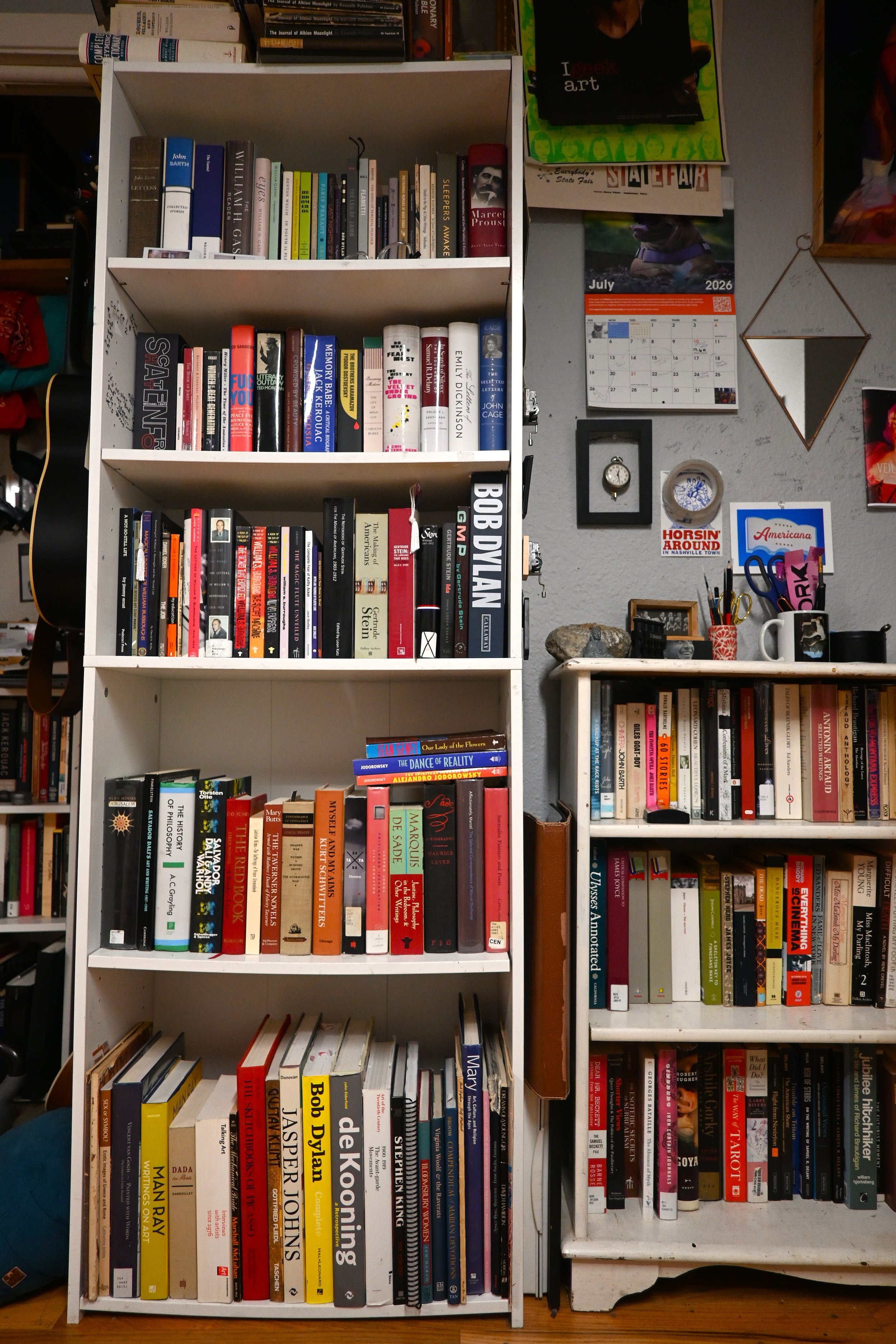
“I have this whole bookshelf [dedicated to the] Dada movement. I love Dada. So, anyway, I kept on seeing Dada, Dada, Dada along with this whole father thing. And, I guess, I started thinking about who these father figures in my life were; these touchstone father figures over the years. And as you age, I think, and learn about people, they kind of slough off a little because you learn [more] about them or they might put out something that you don’t agree with … And I was just going through the people in my life that have really influenced me.”
And they thought about the time when they happened to pick up The Journal of Albion Moonlight in a laundromat one day. They had heard of the author Kenneth Patchen in relation to the Beats before, but that was about it.
“And his worldview and his anger, his righteous anger—his righteous, peaceful, gentle, loving anger—I really connected with. I didn’t know that there were people who just took Jesus in the temple and just went, ‘What about that?’ I had connected with many books in the past but that was the first time it happened with a character.
“It’s a really philosophical book. So, yeah, it really changed my… I don’t know if that book changes your life or anything. I definitely connected with it. It’s been one of those books that I’ve given to people over time. It’s just been with me for so, so long and I realized just how much it meant to me. It just felt.. It sounded like… I just started having my partner call me it and I was like, ‘This feels right.’”
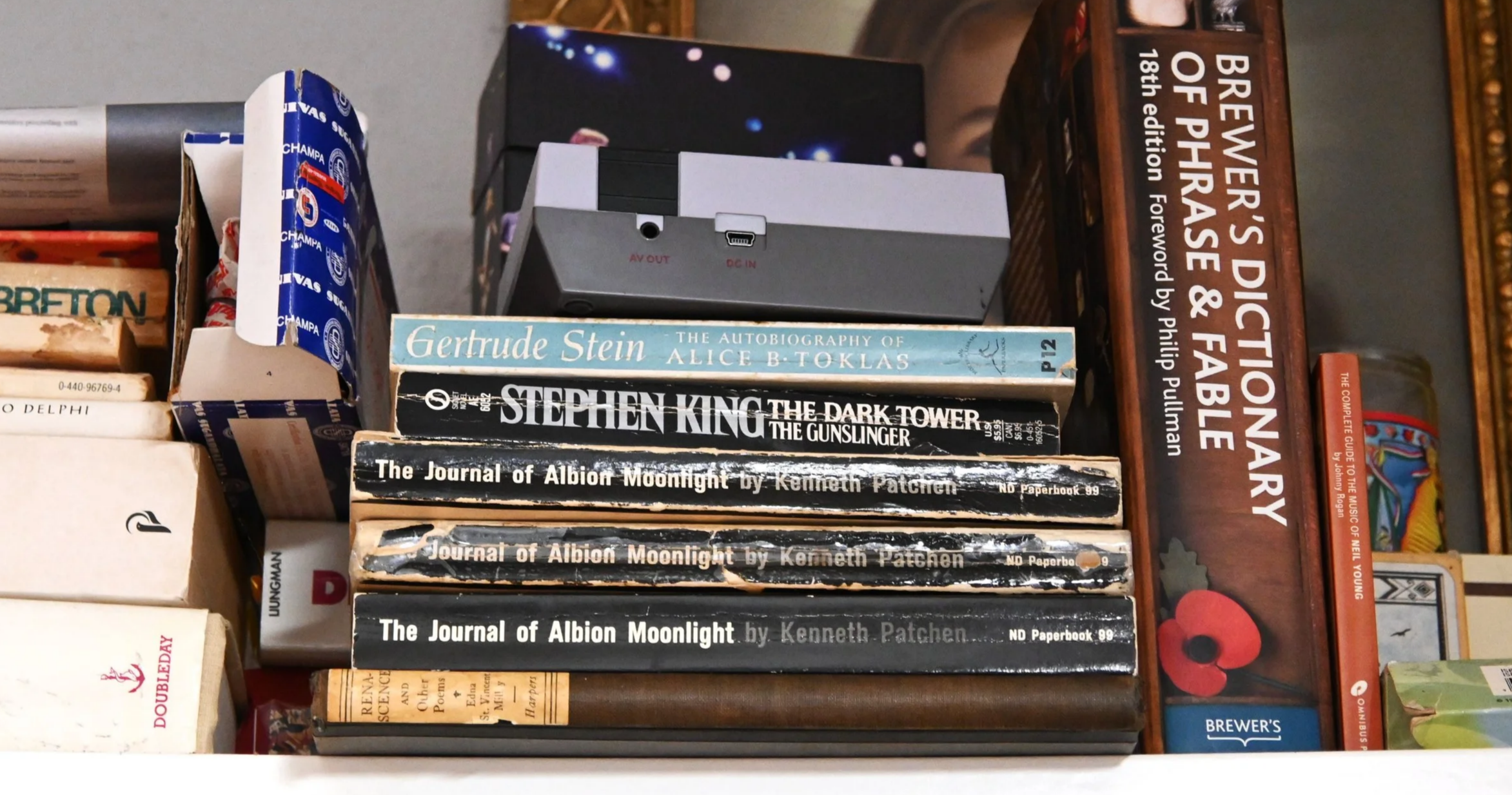
A stack of The Journal of Albion Moonlight copies in Albion’s studio
For Albion, it provides a fundamental atmosphere to their work. They understand and identify with the rage incited by corporate greed, ego-driven manslaughter, and the heavy repercussions of generically selfish humans.
“I find him to be a deeply moral artist. And that is where I want to come from… I feel like [The Journal of Albion Moonlight is] a moralist character. It strikes the right kind of American Surrealism… [Patchen] just has a very authentically, non-posing, natural surrealism that I really like. That’s another, easy, touchstone to put you in the right frame of mind.”
Because, again, the right frame of mind provides the right kind of context. Albion claims that the wrong venue can really turn an audience off to their work. They’ve even had their work taken down due to its sexual nature. And it’s true, things have their time and place. And the time and place we’re living in has its own unique flavor of strange.
“I don't like HD and all that. It's all too much. It’s funny because I think it’s affecting artists’ eyes. I mean, there's so many realists now. Every single thing is so focused and that’s just not how we see in real life… Everything—all the art is so antiseptic and clean. I think it's time for us to get a little messy. Like, the world's falling down around us! And you wouldn't know it from a lot of our culture right now.”
It’s quick, off-handed remarks like this that show a flash of Albion’s brilliance—that give the viewer a direct line into the creator’s thought process behind their work. The stills, the images, the embellishments in Albion’s pieces, they serve as and simultaneously represent context. Our art, television, social media, music, movies… So many of them are highly manufactured and polished. Meanwhile, there is a tremendous amount of uncertainty across the globe. And I’m not trying to say that we should break down and cry on Instagram live, but perhaps we could all find a bit of comfort in admitting confusion; in not delving into AI-fueled despair but rather having a straightforward conversation about how to actually live alongside it without resorting to bludgeoned-to-death takes from LinkedIn.
For example, Albion was so real for saying “I often don't know what things are about. I often think, ‘I don't know what that was. I liked it though.’ I don't know what's happening. Like, I don't know why these people are acting like this. I don't know why these singers are so upset. Sometimes, I just think, ‘Man, I just need someone to make some abstract noises because I know that I don't understand these people.’ Something like the Art Ensemble of Chicago, you know? Or something where it's just a bunch of people making noises? That’s heaven.”
“I often don’t know what things are about. I often think, ‘I don’t know what that was. I liked it though.’ I don’t know what’s happening. Like, I don’t know why these people are acting like this. I don’t know why these singers are so upset. Sometimes, I just think, ‘Man, I just need someone to make some abstract noises because I know that I don’t understand these people.’”
This surface-level, supposed discordancy has been a throughline in Albion’s work. In the past, I have stated that the viewer does not have to know the history of an artist or the background of an art movement in order to enjoy a piece. I stand by that. However, knowing anything at all (i.e. the artist’s intention, mental state, time period) almost guarantees additional depth to an already meaningful dialogue between a work and a viewer. The conversation can go deeper. One could even completely disregard the intention and explanation of the artist out of spite. That’s fair (and keeps things spicy). But this is what Albion is currently at odds with. They want to be more straightforward about their references and allusions, but they also feel that, ultimately, it’s none of their business what happens when others look at their paintings. If someone wants to know who or what is playing out in the foreground, they can literally just ask. If they don’t, that’s their divine right as well. But the artist does hope that a handful will find out sometime, though. Even if it’s in the form of a surreal understanding.
“Maybe they’ll be watching a movie and feel something really uncanny… You know? Like, what a weird experience that would be. Maybe, in its own way, that’s its own singular pleasure; the mystery.”
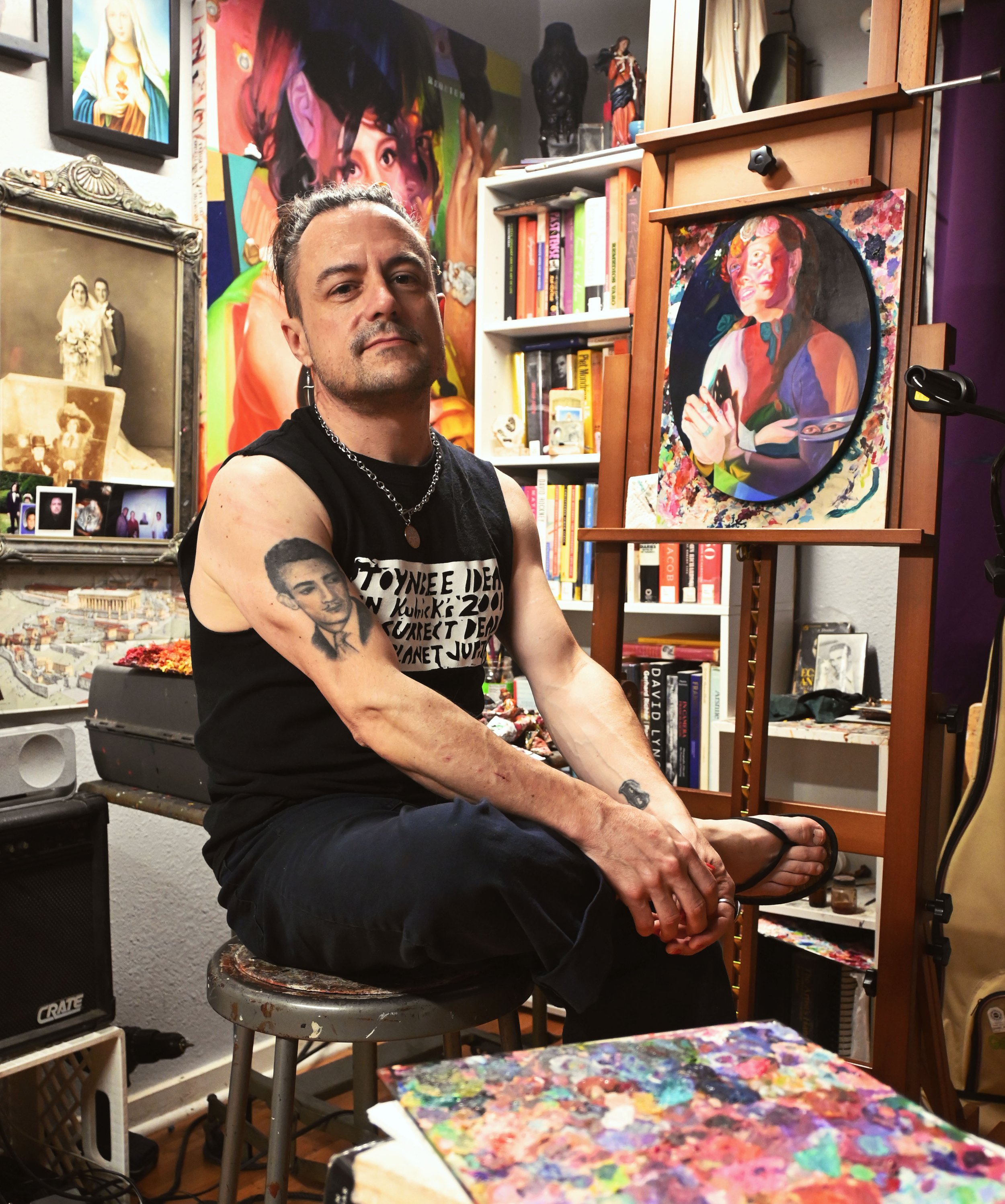
The artist in their studio